
목차
- We’re Entering the Era of AI-Generated Product Pages
- How to Create a Product Detail Page with GPT, Gemini, or Claude
- The Biggest Problem: GPT Only Generates Text
- The Rise of Specialized “Product Page AI”
- Draph Art: AI for Ecommerce Product Pages
- GPT vs Draph Art: What’s the Difference?
- Who Should Use Draph Art Product Page AI?
- Final Thoughts
Summary
- Recently, more and more ecommerce sellers and marketers are using AI to create product detail pages.
- In particular, many people use generative AI tools like GPT, Gemini, and Claude to write product descriptions and marketing copy.
- However, when you actually try to create a product page with AI, you quickly realize that there are still many extra steps involved—such as image creation, design editing, and uploading the page to your online store.
- Because of these challenges, a new type of tool has recently emerged: AI services that automatically generate a full product detail page using only product information and photos.
- One well-known example is Draph Art, an AI platform specialized in creating ecommerce content.

We’re Entering the Era of AI-Generated Product Pages
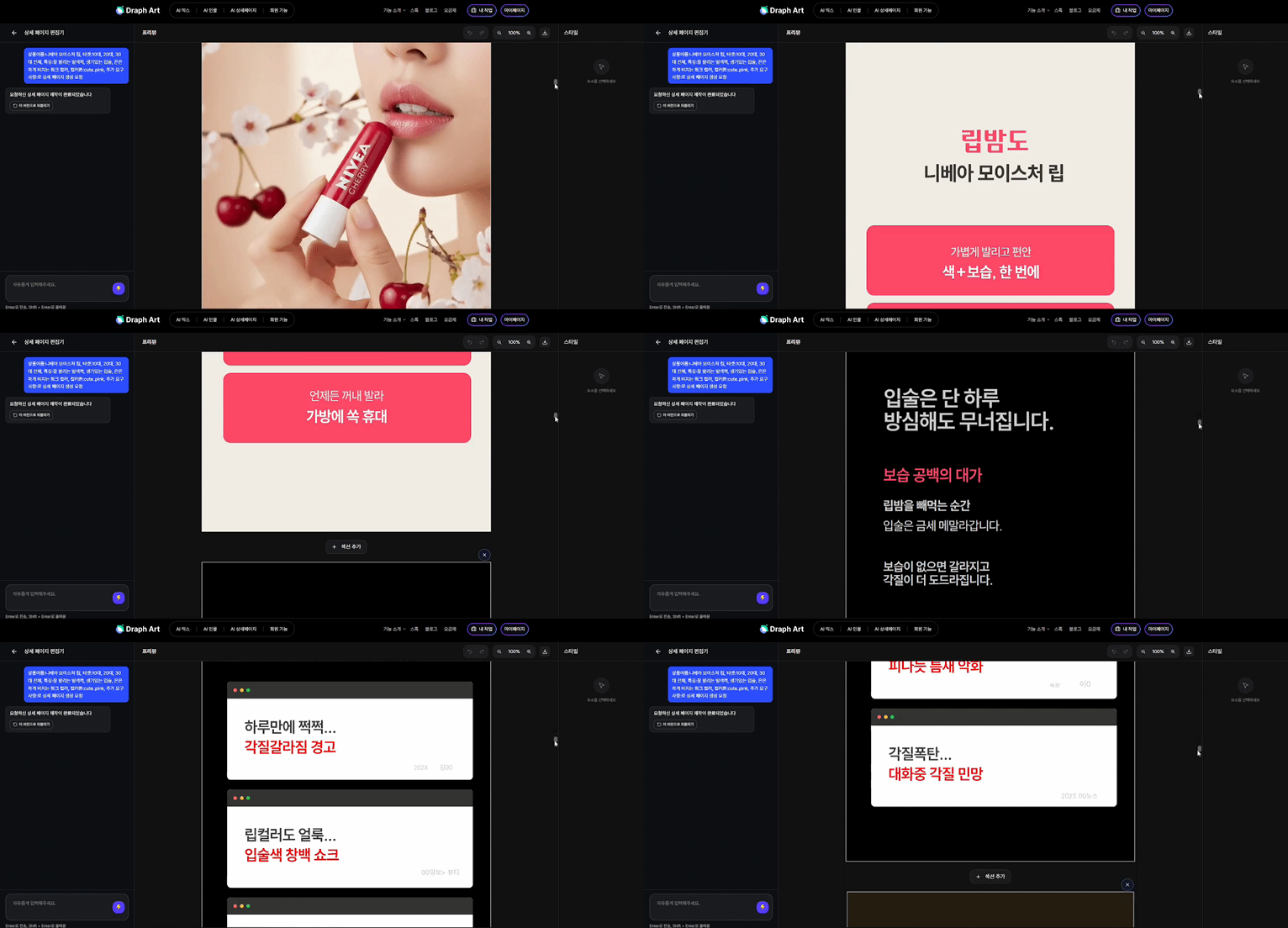
Over the past few years, generative AI technology has evolved rapidly, and the way ecommerce product pages are created has changed as well.
In the past, creating a product detail page required many steps:
- Product photography
- Image editing
- Design layout work
- Copywriting
- Uploading to the ecommerce platform
All of these tasks required a lot of time and cost, so many sellers and marketers began looking for a more efficient way.
That’s why many people are now trying to use AI product page tools to reduce production time.
The most commonly used generative AI tools include:
These tools can quickly generate product descriptions and marketing copy, which is why many people believe that AI can make product page creation much easier.
How to Create a Product Detail Page with GPT, Gemini, or Claude
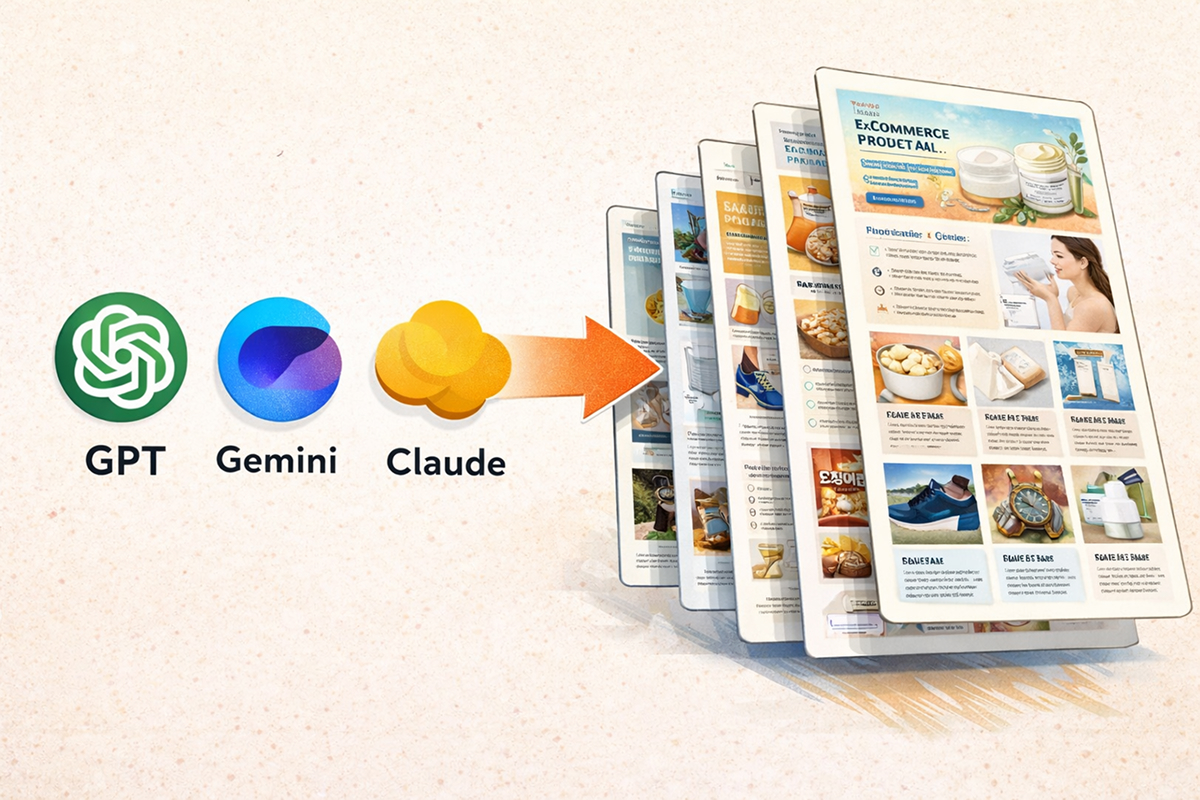
When using generative AI, product page creation usually follows this process.
For example, you can input product information into GPT and ask:
“Write product page copy for this product.”
The AI will generate content such as:
- Product features
- Marketing copy
- Customer problem-solving messages
Another approach is to ask:
“Create a product page structure.”
In this case, the AI may suggest a structure like:
- Problem introduction
- Product features
- How to use the product
- Customer reviews
- FAQ section
Because of this convenience, many people are now trying to create AI product pages using generative AI tools.
But once you actually start working with them, you’ll quickly notice that the process is more complicated than expected.
The Biggest Problem: GPT Only Generates Text
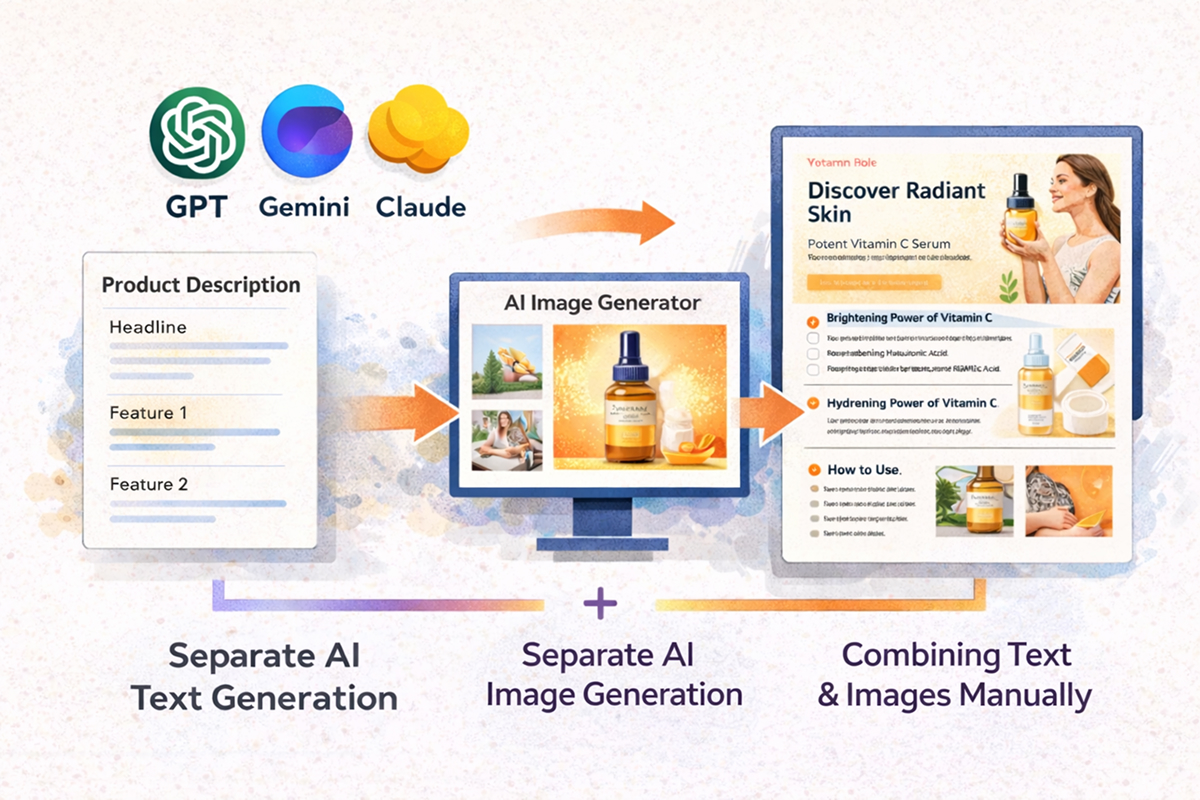
One of the most common issues when creating product pages with generative AI is that the AI only generates text, not the full page.
You Still Need to Create Images Separately
Tools like GPT and Gemini are primarily text-generation AI tools.
This means that the visual assets needed for a product page—such as:
- Product images
- Model shots
- Lifestyle images
still need to be created separately.
Because of this, many people end up using AI image generation websites or editing tools to create the visuals.
You Still Need to Do Design Work
A product detail page is not just text.
It’s a combination of:
- Images
- Layout
- Visual design
So even if GPT generates the copy, you still need to design and arrange the actual page.
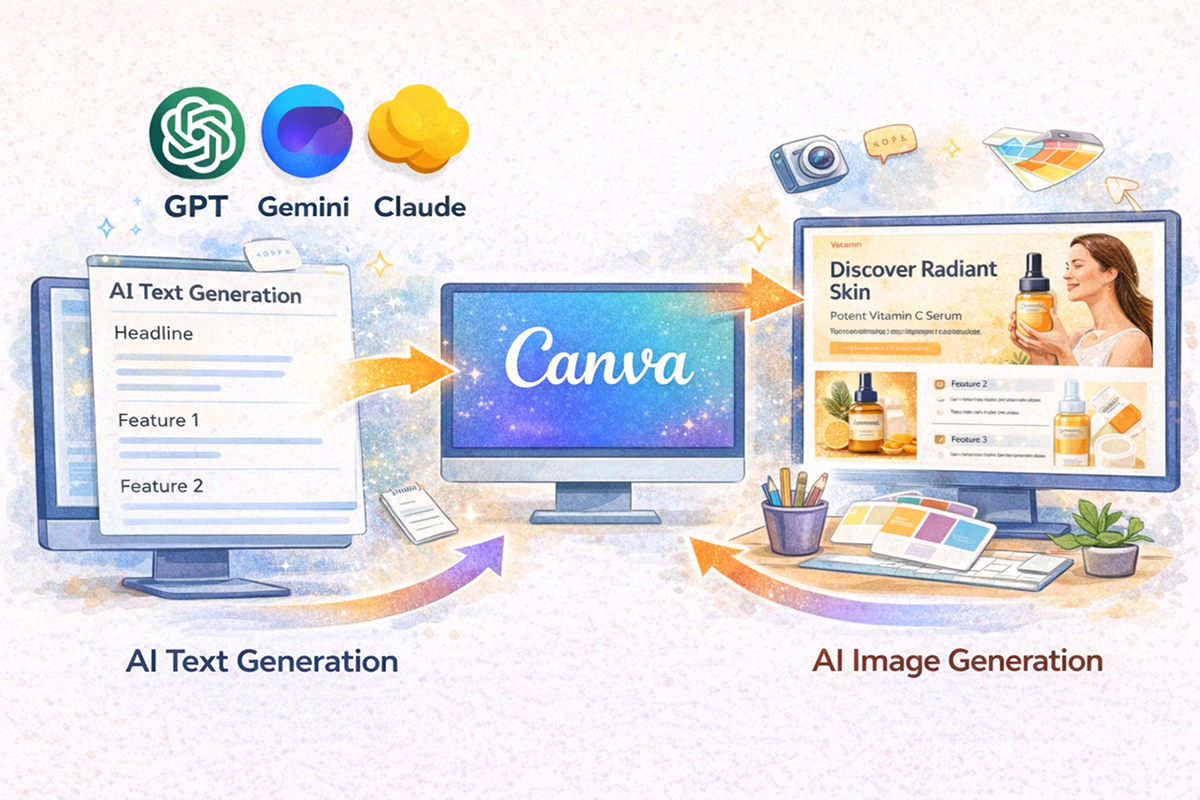
Many people end up using tools like Canva or free PPT templates to redesign the product page layout.
Creating AI Product Pages Often Requires Multiple AI Tools
In reality, creating a product page usually involves using several AI tools together.
For example:
- Using AI image compositing tools to create product visuals
- Using background removal tools
- Using image editing tools
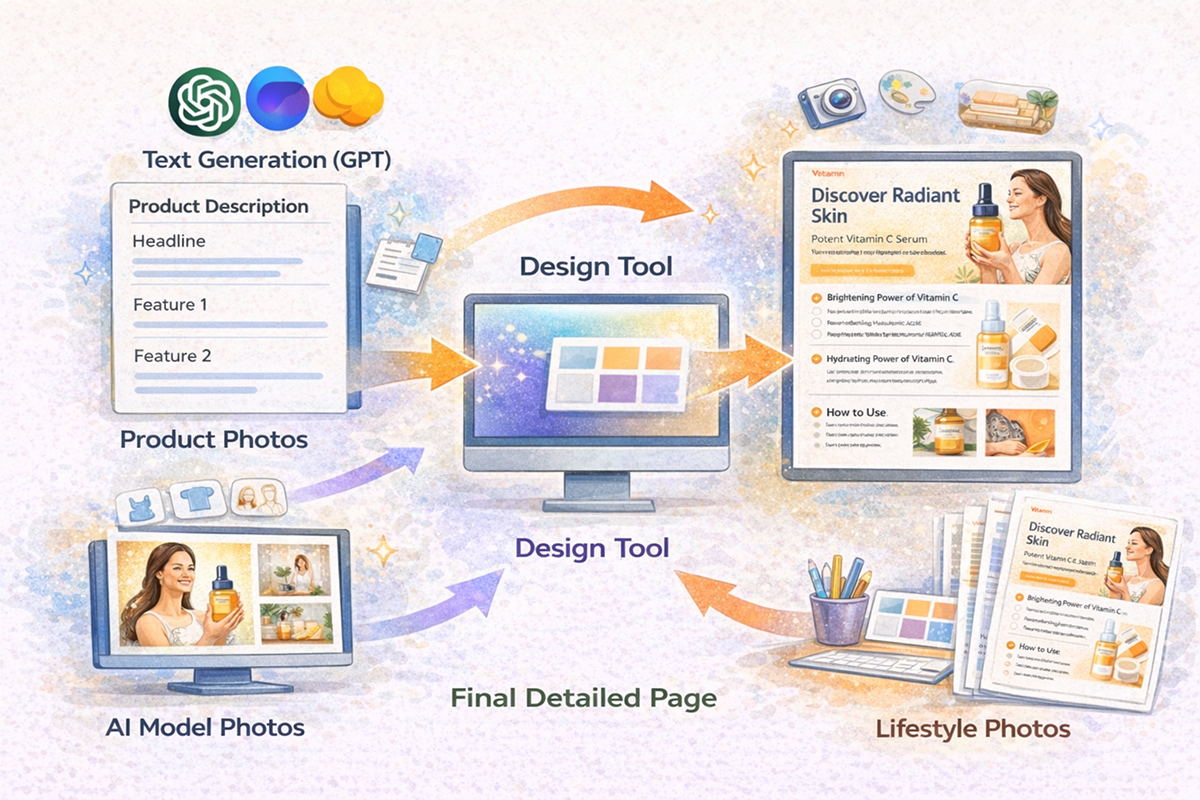
The typical workflow often looks like this:
GPT → Image Generation → Design Editing → Upload to Ecommerce Platform
This means that generative AI alone often cannot produce a fully completed product page.
The Rise of Specialized “Product Page AI”
Because of these limitations, a new type of tool has recently emerged: AI specifically designed for creating ecommerce product pages.
While general generative AI focuses on text generation, a product page AI aims to generate the entire page automatically from product information.
In other words, it can handle:
- Copywriting
- Image creation
- Page layout
all at once.
Thanks to these tools, interest in AI product page generators is rapidly growing among ecommerce sellers and marketers.
Draph Art: AI for Ecommerce Product Pages
One service that reflects this trend is Draph Art, a platform specialized in ecommerce content creation.
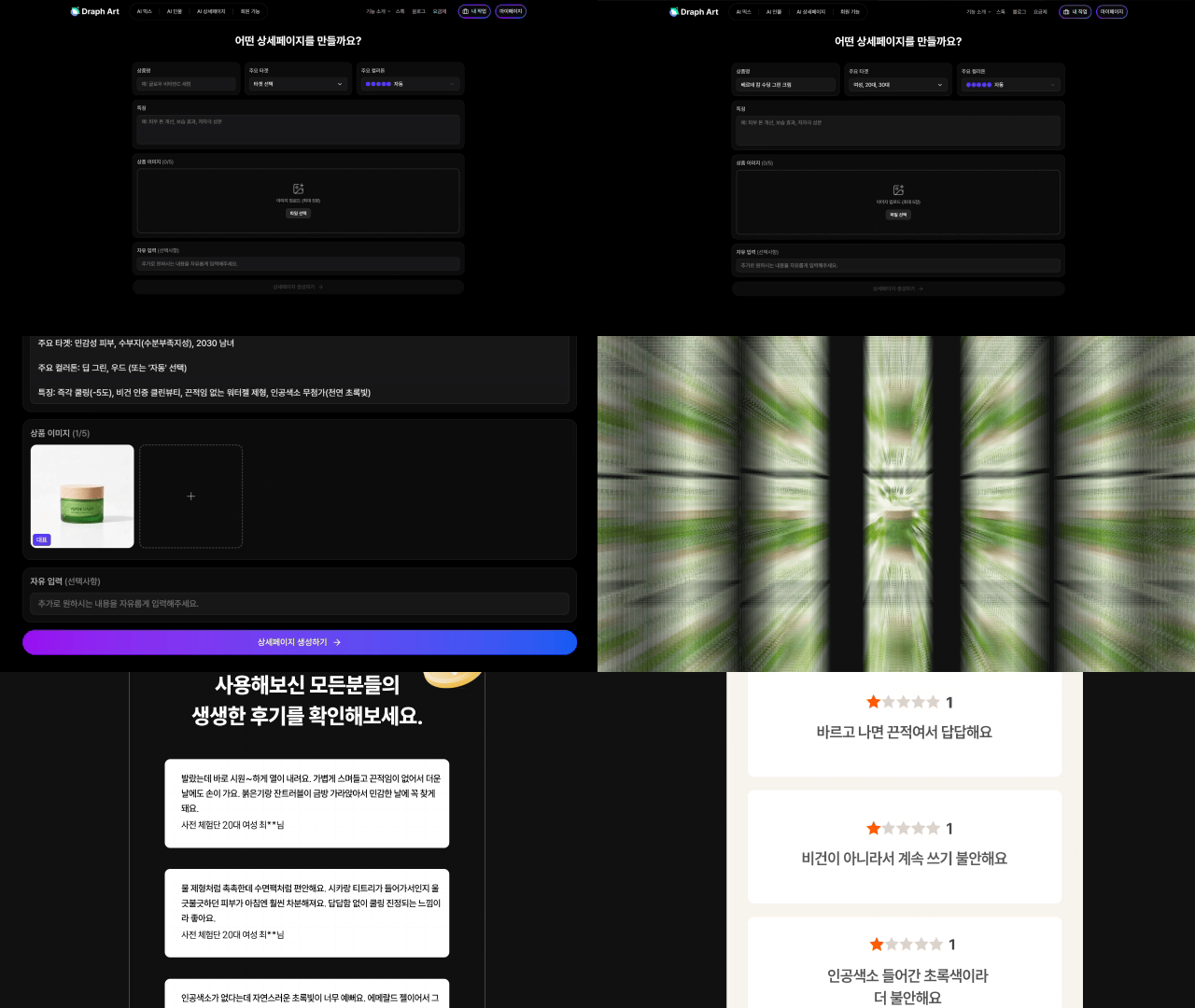
The AI product page generator in Draph Art works like this:
Simply upload:
- Product information
- Product photos
Then the AI automatically generates:
- Product page planning
- Copywriting
- Section images
- Full page layout
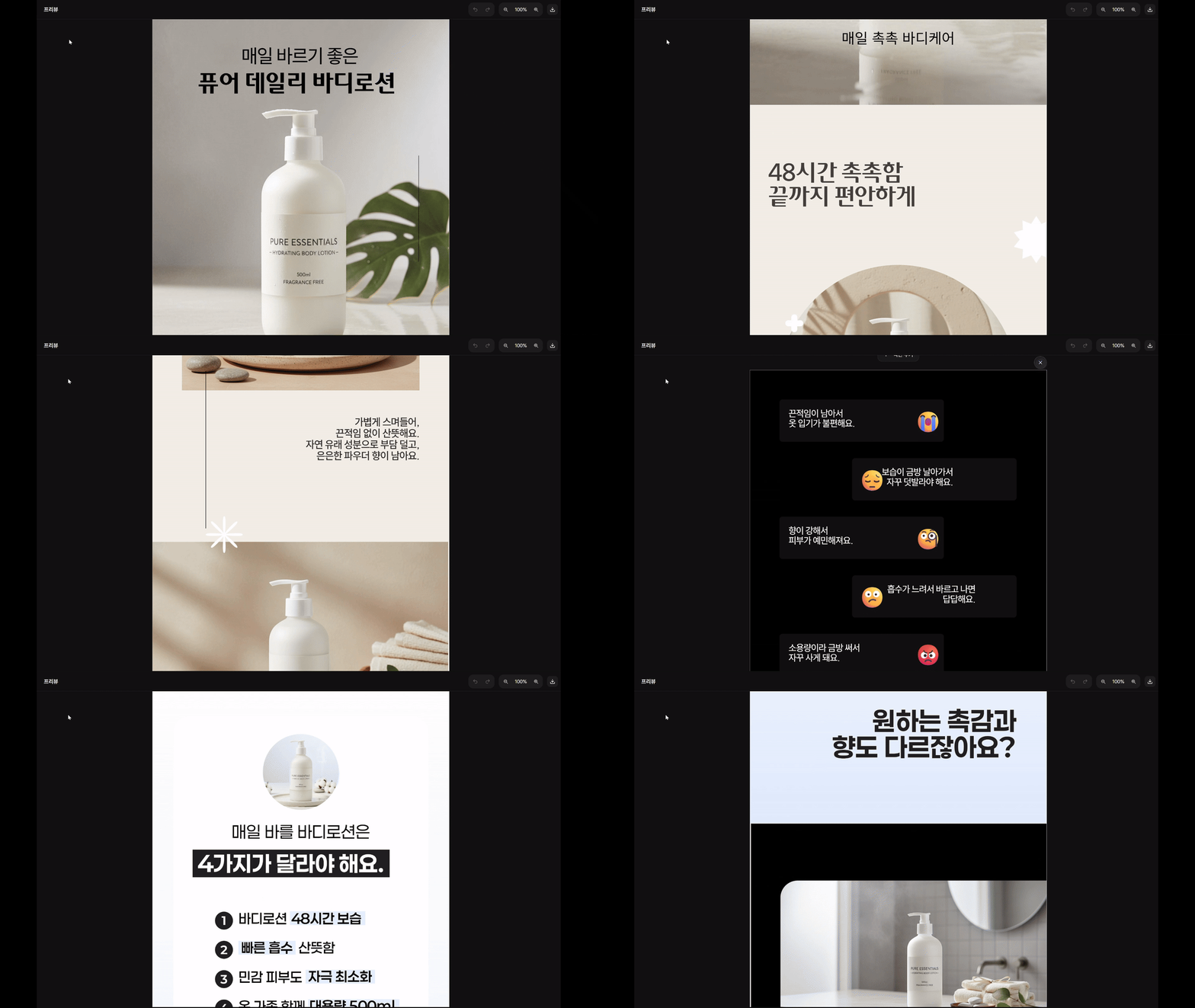
When product photos are uploaded, the AI can also generate:
- Model shots
- Lifestyle images
based on the uploaded product images and arrange them according to the product page structure.
This means that a process that previously took hours or even days can now be completed in just a few minutes.
GPT vs Draph Art: What’s the Difference?
To summarize, general generative AI like GPT and specialized product page AI like Draph Art serve slightly different roles.
| Category | GPT / Gemini / Claude | Draph Art Product Page AI |
| Copywriting | Available | Available |
| Image Generation | Requires separate tools | Automatically generated |
| Design Layout | Must be edited manually | Automatically generated |
| Ecommerce Optimization | Not included | Included |
Because of this, many people now use GPT for writing copy and product page AI tools for actually creating the product page.
Who Should Use Draph Art Product Page AI?
AI product page tools can dramatically reduce production time, especially for:
- Smart Store sellers
- Online store owners
- Solo brand founders
- Marketing managers
For ecommerce businesses that launch new products frequently, the speed of product page creation is extremely important.
Automation tools like this can make a huge difference.
Final Thoughts
Thanks to the rapid development of generative AI, the process of creating product pages is becoming faster and more efficient than ever.
However, using tools like GPT alone still requires additional work such as:
- Image creation
- Design editing
- Ecommerce platform uploads
That’s why all-in-one product page AI tools are gaining more attention.
In the future, ecommerce content creation will likely involve a combination of generative AI and specialized ecommerce AI tools.